Sufficient capacity to accommodate EV growth, but low-voltage networks a looming problem – Eskom




State-owned power utility Eskom says it has sufficient capacity to accommodate the current growth in electric vehicle (EV) sales, buoyed by surging oil prices, but points out that low-voltage residential networks will, most likely, pose a future challenge.
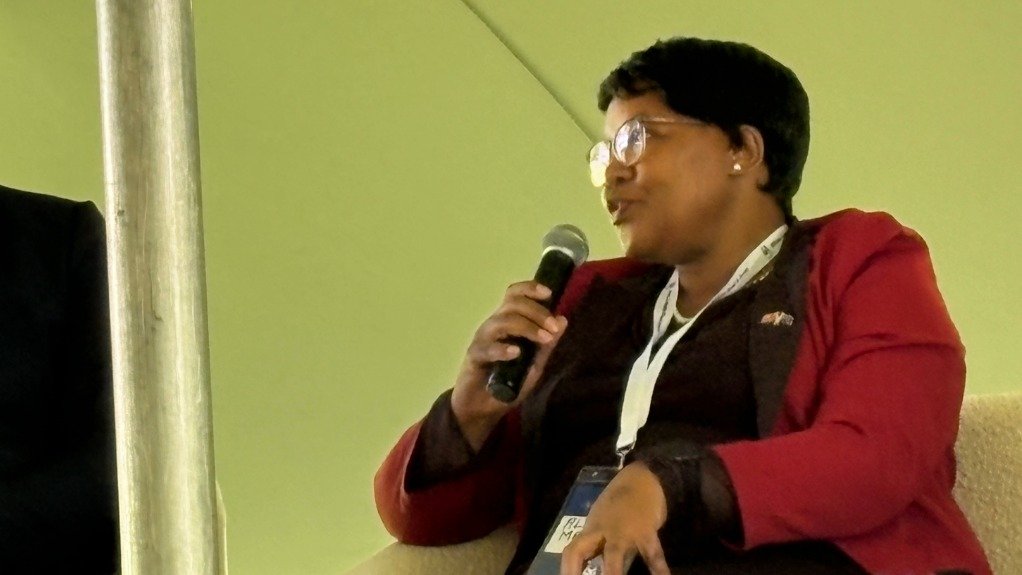
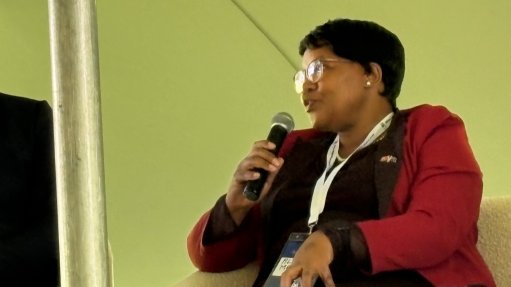
Speaking at the Africa E-Mobility Week 2026 held in Stellenbosch this week, Eskom business development and distribution division senior manager Aletta Mashao said Eskom’s energy planning department had already started “a few years ago” to incorporate EV sales in its planning.
“As it stands currently, for the next ten years, in the short to medium term, we’ll have enough capacity.”
Mashao pointed out, however, that low-voltage networks, especially those supplying electricity to residential customers, would, most likely, present a future challenge.
She said Eskom was able to work with commercial fleet customers to plan around their EV needs.
“But, with residential customers, we don’t know where the EVs and charging stations are. These [low-voltage] networks were not designed to accommodate that type of load. The biggest appliance in the home has always been the geyser, and now you have a home charger.”
As EV adoption was still low at this point, this lack of knowledge did not yet present a problem, noted Mashao.
It could, however, become an issue as EV adoption accelerates.
“So, we need to know where each charging station is in residential areas so that we can include this in our network development plans.
“If we don’t plan for it proactively in low-voltage networks, we might end up in a situation where we have to limit the load or reduce the load because of EV charging.”
Mashao said this planning needed to happen in partnership with municipalities.
She noted that Eskom also aimed to secure support in developing regulations around EV home chargers.
“The chargers should be smart chargers, and they should be visible so that they can be remote controlled.
“We need support from policy makers so that we can get regulations that can ensure that all home chargers are smart chargers.”
Mashao said this did not imply the registration of home chargers with Eskom.
“Vehicle manufacturers – OEMs – can assist us with this information. We hope to work with OEMs in the future so that we’ll know where EVs are going – within the limits of the Protection of Personal Information Act.”
Mashao added that Eskom would also need to incorporate charging station operators and the South African National Roads Agency in its planning as the use of EVs on the country’s freeways grew – especially in terms of long-distance trucking.
“They are looking at megawatt charging stations that require a lot of capacity, and this is not currently available along the national roads.”
EV Charging Tariffs
Mashao said there was currently no EV-specific charging tariff in South Africa.
She noted, however, that the development of these tariffs was necessary to reduce any potential impact on the electricity network.
“If everybody charges at the same time, we won’t be able to manage the impact on the network.
“Time-of-use tariffs, or dynamic tariffs, can help so that people charge in off-peak hours.
“It is important to prioritise the development of these tariffs. From Eskom’s side the work has already started,” said Mashao.
Public Charging
Eskom decided to decarbonise its fleet of 10 000-vehicles-plus about five years ago, noted Mashao.
The utility started with 20 EVs and ten charging stations, with the current numbers at 100 EVs and 105 charging stations.
“We are moving towards public charging now as well, with 19 of these charging stations public charging stations.”
Article Enquiry
Email Article
Save Article
Feedback
To advertise email advertising@creamermedia.co.za or click here
Projects

Latest Multimedia
Latest News

Showroom
Design, Construction and Maintenance of Site Erected, Welded Bulk Storage Tanks for the Petrochemical, LNG, Ammonia and Sustainable fuel Sectors.
VISIT SHOWROOM
Sulzer South Africa, established in 1922, partners with critical industries like power, oil & gas, water, mining, and chemicals to boost...
VISIT SHOWROOM
Press Office
Announcements
What's On
Subscribe to improve your user experience...
Option 1 (equivalent of R125 a month):
Receive a weekly copy of Creamer Media's Engineering News & Mining Weekly magazine
(print copy for those in South Africa and e-magazine for those outside of South Africa)
Receive daily email newsletters
Access to full search results
Access archive of magazine back copies
Access to Projects in Progress
Access to ONE Research Report of your choice in PDF format
Option 2 (equivalent of R375 a month):
All benefits from Option 1
PLUS
Access to Creamer Media's Research Channel Africa for ALL Research Reports, in PDF format, on various industrial and mining sectors
including Electricity; Water; Energy Transition; Hydrogen; Roads, Rail and Ports; Coal; Gold; Platinum; Battery Metals; etc.
Already a subscriber?
Forgotten your password?
Receive weekly copy of Creamer Media's Engineering News & Mining Weekly magazine (print copy for those in South Africa and e-magazine for those outside of South Africa)
➕
Recieve daily email newsletters
➕
Access to full search results
➕
Access archive of magazine back copies
➕
Access to Projects in Progress
➕
Access to ONE Research Report of your choice in PDF format
RESEARCH CHANNEL AFRICA
R4500 (equivalent of R375 a month)
SUBSCRIBEAll benefits from Option 1
➕
Access to Creamer Media's Research Channel Africa for ALL Research Reports on various industrial and mining sectors, in PDF format, including on:
Electricity
➕
Water
➕
Energy Transition
➕
Hydrogen
➕
Roads, Rail and Ports
➕
Coal
➕
Gold
➕
Platinum
➕
Battery Metals
➕
etc.
Receive all benefits from Option 1 or Option 2 delivered to numerous people at your company
➕
Multiple User names and Passwords for simultaneous log-ins
➕
Intranet integration access to all in your organisation